Daftar
Daftar is a personal finance app for people on a fixed salary — designed around a quiet but stubborn truth: more income rarely fixes the problem. Awareness, structure, and the discipline of small daily logging do.
| Year | 2022 |
| Role | Product Designer |
| Collaborators | Mohammad Shahbazi, MohammadHossein Heydarzadeh |
| Website | daftar.app |
The real question
For a salaried household, income is essentially fixed. Side incomes are hard to start. So "earn more" is bad advice — the only lever is what happens between paydays.
That reframing changed everything downstream. The app isn't a budgeting tool; it's a tool for noticing.
Who I designed for
Low-wage savers
Want savings but need tighter management of income and expenses.
Family breadwinners
Single income, multiple dependents, recurring fixed costs.
Young couples
Joint planning for short-term goals like rent, travel, a first car.
Independent students
Variable income from gigs, low margin for surprises.
Newly independent youth
First time managing their own bills end-to-end.
Fixed income, unclear outflow
Everyone knows what comes in. Almost no one knows where it goes.
What users actually need
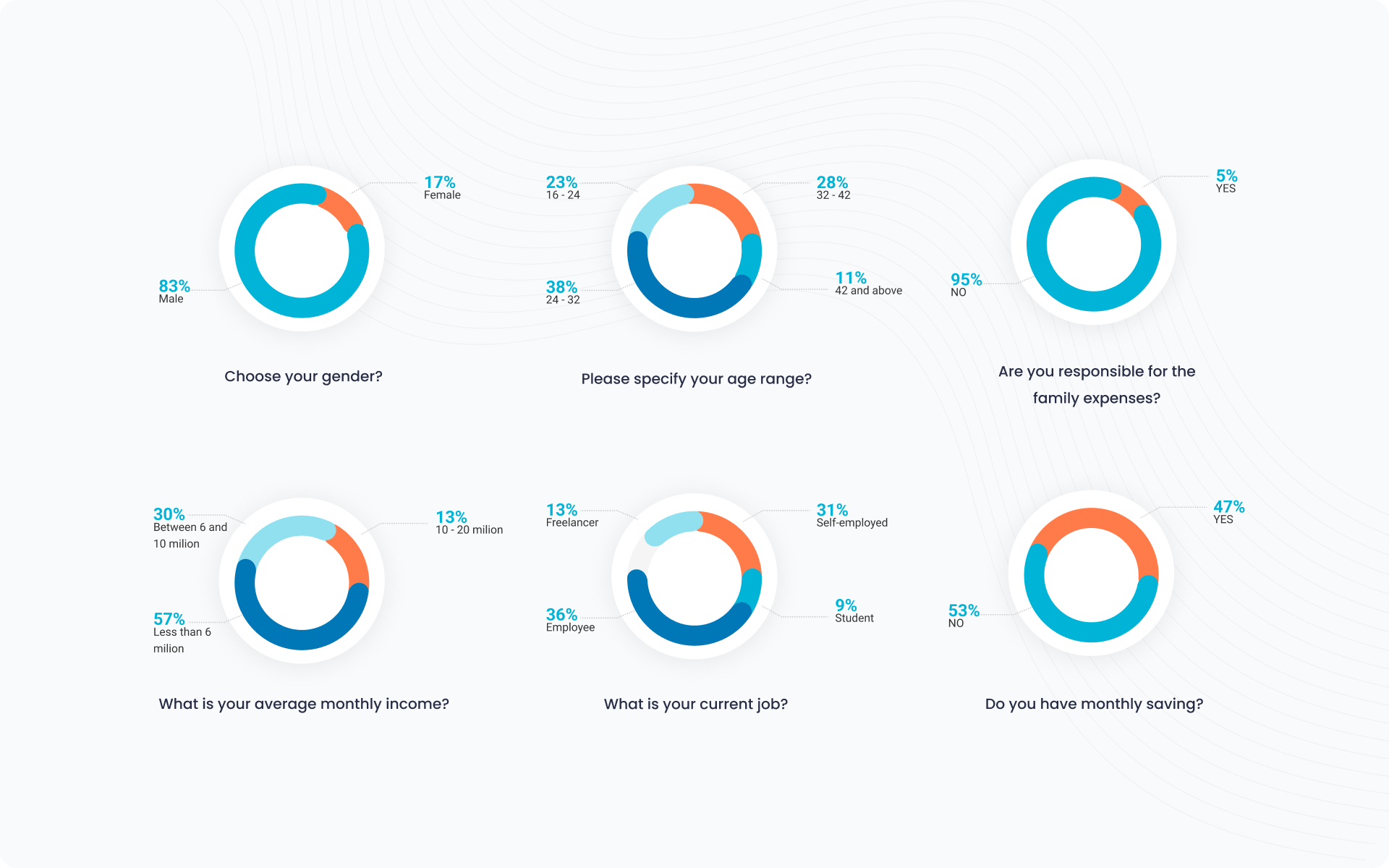
Five interviews surfaced patterns that mattered more than any feature list.
- 01Identify situations that trigger financial crises. Recognize the patterns before they repeat.
- 02Be ready for unpredictable costs. A buffer that exists before it's needed.
- 03See the current state at a glance. One screen, no math required.
- 04Allocate and control funds by purpose. Money has a job before it's spent.
Trade-off that shaped the product
Persona deep dive
Reframed problem statement
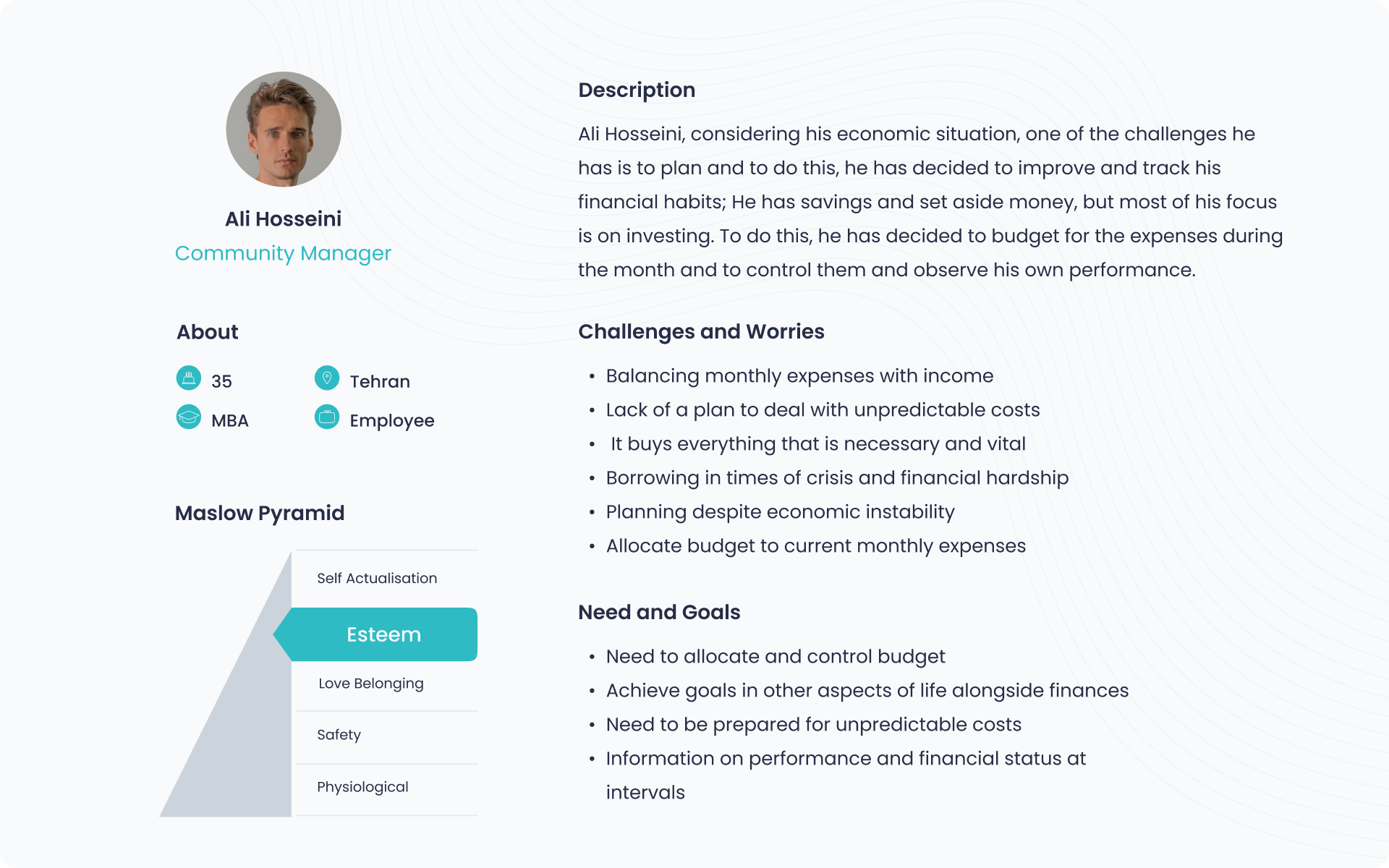
Ali Hosseini has poor spending habits and weak control over his finances. His challenge is to balance income against expenses by planning ahead, so he needs to allocate, control, and budget for current spending — and only then can saving become a realistic outcome instead of a wish.
Solution
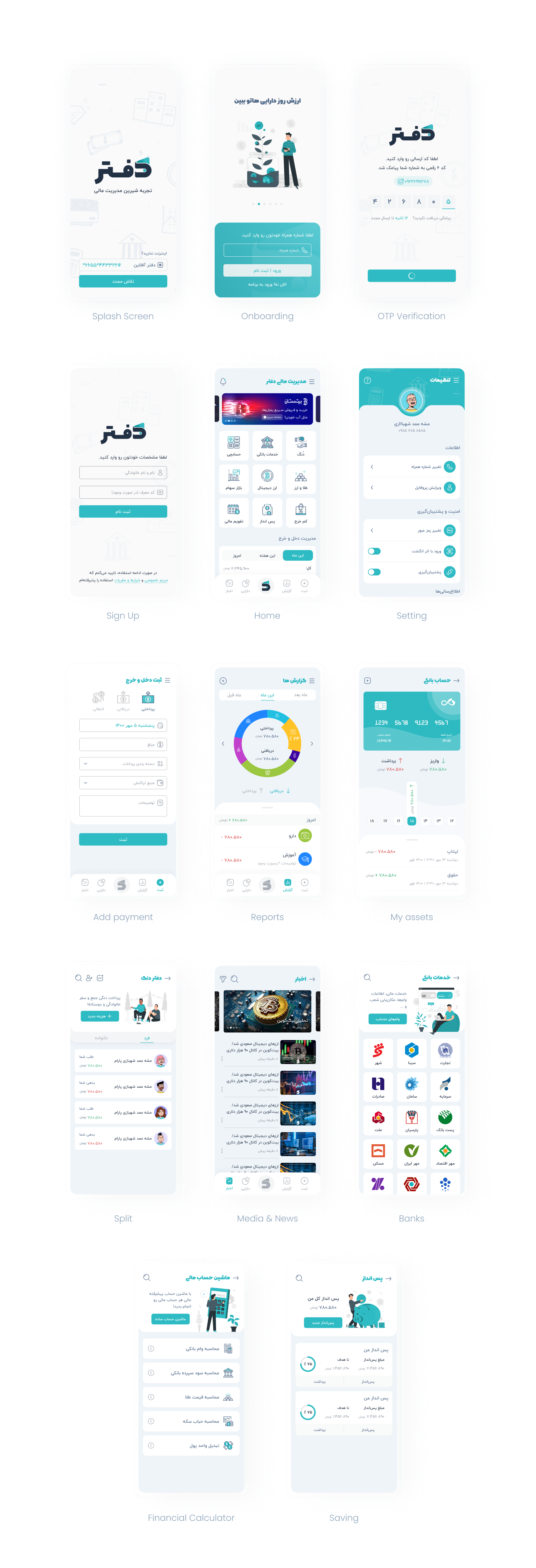
Record transactions, view a single clear report, and budget by category. The app keeps the loop small enough that people actually close it.
Competitive landscape
The personal-finance category is crowded — but every product picks a different primary job. Some optimize for investment tracking, others for couples, others for receipts. Daftar's slot is intentionally narrow: a fast daily ledger for one person on a fixed income. Saying no to the other jobs is the design decision.
Flow
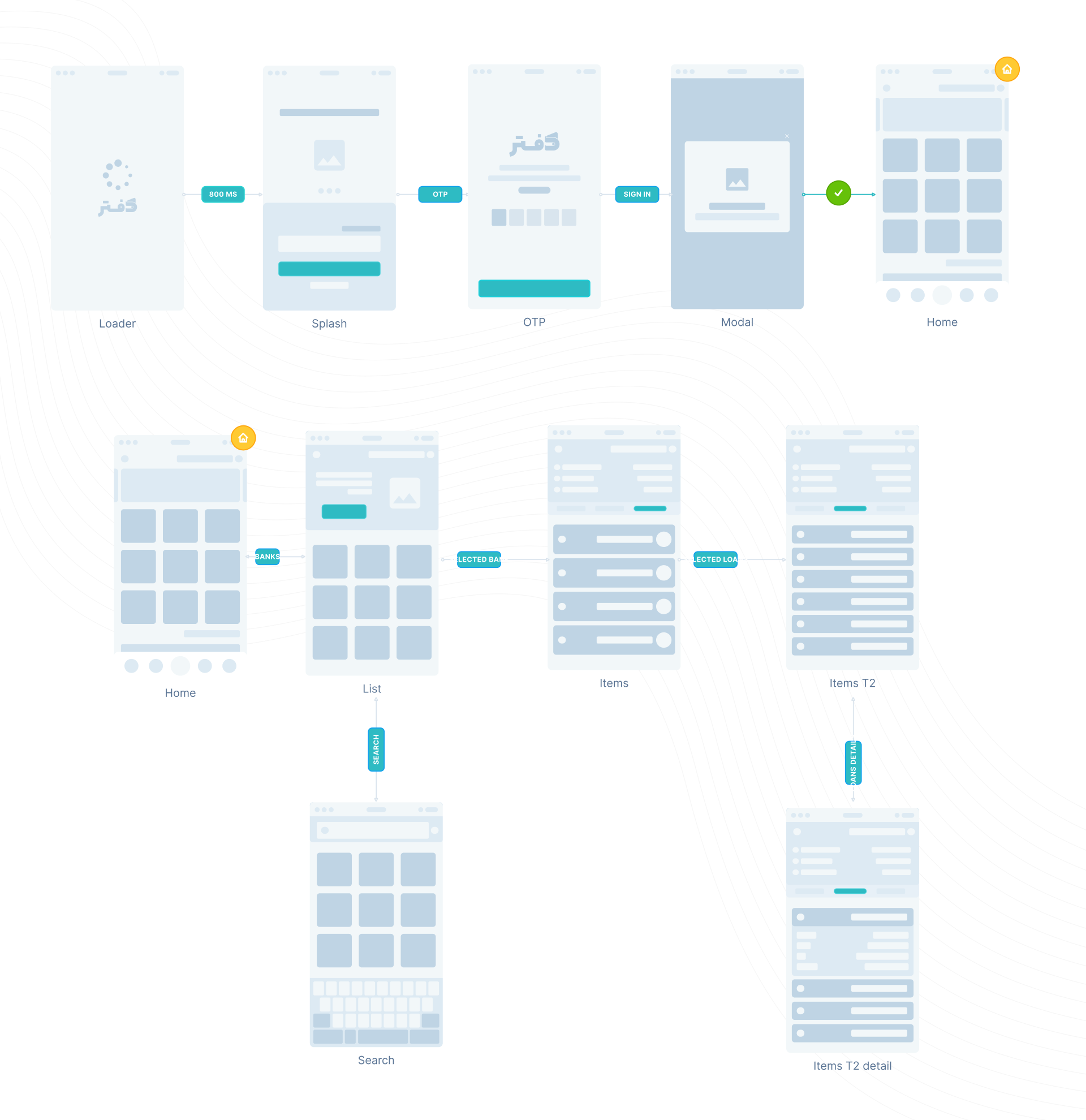
After mapping ideas to the core loop, the user flow stays small on purpose.
Screens
Reflection
Personal finance apps fail when they treat the user like an analyst. Most people don't want a portfolio view; they want to feel less anxious on the 20th of the month. Designing for the feeling — not the spreadsheet — was the part that took the longest to commit to, and the part I'd keep on the next product like this.